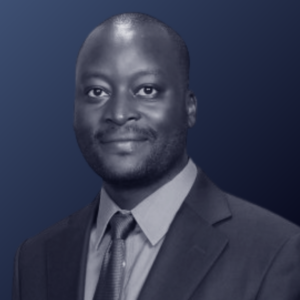
Mutasim Ali, Sudanese human rights advocate and Legal Advisor at the Raoul Wallenberg Centre for Human Rights, addressed the 18th Annual Geneva Summit for Human Rights and Democracy by video on February 18, 2026.
Full Prepared Remarks:
Hello everyone,
I regret that I was unable to attend the Summit in person.
My name is Mutasim Ali. I am a legal advisor at the Raoul Wallenberg Centre for Human Rights and Doctoral Researcher on Peacebuilding and Constitution-Making in Post-Conflict States — but tonight, I am not speaking as a professional. I am speaking as a Sudanese person who has watched his country bleed, who has seen entire communities disappear, and who refuses to let silence become another weapon.
I want to take you to a place called El Fasher, a city in North Darfur, my home town.
Years ago, El Fasher was a city full of life. Students filled the streets. Families welcomed strangers with open arms. If you were lost, someone would walk you home. If you were hungry, someone would feed you. It was a place where people believed in each other.
But today, that same city is living through something no human being should ever face.
The people of El Fasher are trapped under the terror of the Rapid Support Forces, the RSF — a militia born from the Janjaweed, the same group that carried out the horrors of Darfur two decades ago. They have returned, this time with even more brutality. They are targeting people simply because of who they are.
Let me tell you what this looks like.
In 2023, in the city of El Geneina, West Darfur, the RSF and allied militias hunted down people from the Masalit tribe and other non‑Arab communities. They killed families in their homes. They shot people as they ran. They left bodies in the streets. Up to 15,000 people were murdered — not in battle, but in cold, targeted violence.
In April 2024, they attacked the Zamzam camp — a place where displaced families had already lost everything once. More than 1,000 people were killed in a single attack.
And in El Fasher last October, the city that once welcomed the world, the RSF carried out attacks so devastating that between 10,000 and 60,000 people may have been killed. Entire neighborhoods emptied. Entire families erased.
These are not statistics. These are people who laughed, who dreamed, who loved. These are children who once played in the same streets that are now filled with fear and blood visible even from space. These are elders who survived one genocide only to face another.
And here is the hardest truth: Most of the world does not know their names. Most of the world has not heard their stories. Most of the world has moved on.
But the people of Sudan have not given up. They still help one another. They still share what little they have. They still believe that someone, somewhere, will hear them.
Hope is powerful — but hope alone cannot stop bullets and cannot stop genocide.
And we must speak honestly about the forces that make this violence possible. Sudanese activists, UN investigators, and human rights organizations have repeatedly warned that the genocide in Darfur is not happening in isolation — it is being fueled by external actors. And among the most frequently named is the United Arab Emirates, accused of supplying weapons, funding, and political support that have strengthened the RSF’s hand. When a militia commits mass killings, and another state supplies the tools that make those killings possible, people on the ground see that as complicity — as partnership in their destruction.
And we must also be honest that the Sudanese Armed Forces, the other party to the conflict, are not innocent in this story — they created the RSF in the first place, empowered it for years, and have themselves been implicated in grave abuses against civilians.
And so, for Sudanese families, this is not a war between heroes and villains. It is a war in which every armed actor has treated civilian lives as expendable.
Tonight, I want to ask you to imagine something simple. Imagine the place you love. Your hometown, your childhood street, the place where your memories live. Now imagine waking up to learn that half the people you know are gone.
That is what has happened in El Fasher.
And yet, the world has not acted with the urgency this moment demands.
So tonight, I am asking you — not as an expert, but as a human being — to refuse to look away.
Sudanese lives matter. Sudanese families matter. Sudanese suffering deserves the world’s attention, compassion, and action.
This is not a distant crisis. This is a test of who we are.
Do we believe that every life has equal value. Do we believe that no community should face extermination in silence. Do we believe that humanity means standing with those who are being crushed.
If we do, then we cannot stay quiet.
Here is the call to action.
Speak about Sudan. Share what is happening. Push your leaders to act. Demand protection for civilians. Demand humanitarian access. Demand accountability — not only for the RSF commanders who carry out these crimes, but also for the governments and networks that arm them, fund them, and enable them.
Your voice may feel small — but silence is what allows atrocities to grow.
The people of El Fasher once opened their doors to the world. Now they need the world to open its heart to them.
Let us be the generation that refuses to look away. Let us be the people who chose courage over comfort. Let us be the reason Sudan knows it has not been forgotten.
Thank you.