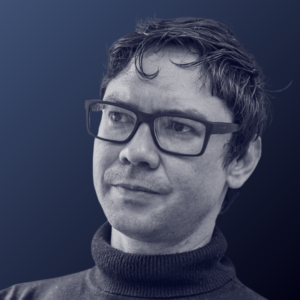
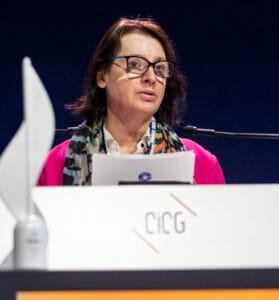
Alfred Moses, Chair of UN Watch, former U.S. Ambassador to Romania and Special Presidential Envoy for the Cyprus Conflict, addresses the 10th Annual Geneva Summit for Human Rights and Democracy – see quotes below, followed by full prepared remarks.
On politics:
“All of political life is a journey from darkness to light. It’s our mission to speed that journey.”
“Suffering at home in individual countries, in the end, can only be relieved, can only be replaced, by the people in those countries.”
On the Universal Declaration of Human Rights:
“The fight for human rights didn’t begin with the Universal Declaration and doesn’t end with the Universal Declaration. The Universal Declaration was a product of two thousand years of human history.”
“It was codified in the Universal Declaration but we have to move on from the Universal Declaration. It will never be fully adhered to, but it will always be a yardstick by which human rights are judged and measured.”
“The battle to make the Universal Declaration an actuality will depend upon who cares more, who is more committed, who is more willing to pay the price. We? Or they?”
On the opponents of human rights:
“It has two principal enemies: particularism exalts the particular, whether it’s religion, ethnicity, or tribalism over the universal – failing to recognize that universal human rights belong to all of us and the true sovereignty rests with individuals not with governments, not with international bodies, but with human beings.”
“In the end, universalism will win out over particularism. If it doesn’t, the failure is ours and if the failure is ours it is because of our indifference.”
Full Remarks
Good afternoon, it’s been a wonderful day at the Geneva Summit for Human Rights and Democracy.
I’m Alfred Moses, I am the chair of UN Watch. For those of you who have suffered, for those of you who are suffering, for those you will suffer, we have no words to match your sorrow. For Fred and Cindy, we have no words to match your grief. But we were inspired by your reverence for progress in South Korea from the darkness in North Korea.
All of political life is a journey from darkness to light. It’s our mission to speed that journey. I’ve been asked to speak on the seventh anniversary of the Universal Declaration of Human Rights, a document penned here in Geneva, drafted by René Cassin, the French academic and intellectual, championed by Eleanor Roosevelt who was the chair of the US mission to the Human Rights Commission and Chair of the Commission.
It’s looked back upon as a glorious day but it was only a milestone. The fight for Human Rights didn’t begin with the Universal Declaration and doesn’t end with Universal Declaration. The Universal Declaration was a product of two thousand years of human history. Beginning with the Hebrew Bible, the Christian Testament, the French Revolution, the American Revolution, the Scottish philosophers Locke and Hume, to Johann Friedrich Struensee in Denmark. It was the product of two millennia of human thought, human aspiration. It was codified in Universal Declaration but we have to move on from the Universal Declaration. It will never be fully adhered to, but it will always be a yardstick by which human rights are judged and measured. And I can assure you that’s seventy years from now people will be sitting here talking but the Universal Declaration of Human Rights long after all the tyrants that exist today will be gone and forgotten. Such as the way it should be for humanity.
Well, where are we today? The great evils of the past slavery, colonialism they are in the past. The great ideological “isms” communism and fascism have largely disappeared from the earth – Oh sure there’ll be rebirths and people in China talk about communism but it’s not Marxist party control of a mixed economy. And in Cuba – Oh Castro may talk about communism but I doubt that he believes in communism it’s nothing to believe in. It is hollow has been proven to be fatal to the well-being of humankind.
So what do we have? What are the curses of today and how do we deal with them? Let me suggest to you that in the place of the ills of the past we have tribalism, we have ethnic conflicts, we have religious extremism, and we have governments – you use the euphemism of ‘autocratic’ – let’s call it for what is: totalitarian. They permit no dissent, they oppress their own citizens, and as was said today just a few minutes ago by Miss Badawi “they devour their own”. They’ve devoured their own in North Korea, just as they devoured their own in the Soviet Union in the 1930s.
The regimes are bound to fail because they don’t have popular support and without popular support, they cannot for long endure. Now that may sound wonderful.. You’re saying in time they will not endure, but we live in the present and I totally agree with that. So it is our mission, our mission here, to keep the light burning.
The United Nations with all of their pious declarations upon his creation, and all the sanctimonious words that will be spoken in the Human Rights Council next week, in the General Assembly, and even in the Security Council will not cure the evils of the world. It is more oratory than an actual relief of suffering. Suffering at home in individual countries, in the end, can only be relieved, can only be replaced, by the people in those countries. We said this morning with Mr. Aria, he spoke quite eloquently on the point, “unless the people in the individual countries are willing to take the risks and have the power to change the societies that are oppressing them, those societies will more likely than not continue with all of their weaknesses, devouring their own”, “economic stagnation exists in North Korea and in many of these oppressive countries, Iran being another one, but until the people in those countries feel empowered and feel the hope and feel the commitment to change the regime’s the oppression will continue.”
Communism did not disappear in the Soviet Union because of the United States, it disappeared because they hit a stone wall. And the same is true for oppressive regimes throughout history. So as much as it is important for us to be here, for us to keep the torch burning, to hold out hope, it is impossible to save individual persons who are repressed like Desmond and others such as he. In the end, systems will only be changed if the people in those countries are empowered, encouraged and indeed they have the commitment to move forward to change the regimes in their countries.
So your mission is a vital one, I would even say after the past a holy one, but in the end, we can only cheer, we were not on the firing line, most of us are not paying the price, but all of us care deeply. In the end, universal human rights are the answer, it belongs to all of us.
It has two principal enemies: particularism or exalts the particular, whether it’s religion, ethnicity, or tribalism over the universal- failing to recognize that universal human rights belong to all of us and the true sovereignty rests with individuals not with governments, not with international bodies, but with human beings. We as human beings are sovereign and have the basic rights with which were endowed, those include the basic rights in the Atlantic Charter: freedom from fear, freedom from war, freedom of speech, freedom of religion, but it also includes non-gender discrimination, non-discrimination based on sexual orientation, all the freedoms that we have as individuals in our individual sovereignty.
In the end, universalism will win out over particularism. If it doesn’t, the failure is ours and if the failure is ours it is because of our indifference, we don’t care enough. Most people in the world are not oppressors and they’re not people fighting for human rights. It’s a small number on each side. In the end, the battle to make Universal Declaration an actuality will depend upon who cares more, who is more committed, who is more willing to pay the price. We? Or they?
Let us hope that today and in all the years to come those who care more, those who are more committed, those who are willing to sacrifice will be. Not they – but we.
Thank You
10th Annual Geneva Summit for Human Rights and Democracy, UN Opening, February 19, 2018